
Article: Receding Hairline vs Crown Thinning: Which One Progresses Faster?
Receding Hairline vs Crown Thinning: Which One Progresses Faster?
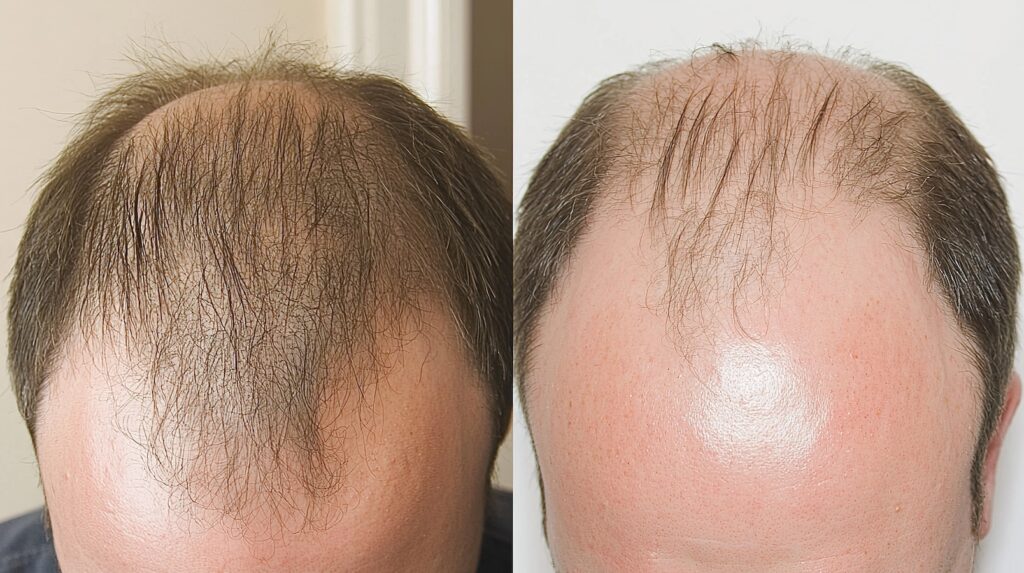
Male pattern baldness rarely attacks the scalp evenly. It typically manifests in two distinct zones: the frontal hairline or the crown (vertex). A common debate among men noticing early signs of loss is which area progresses faster. The answer lies in the biology of the follicle and how we visually perceive density.
Why Men Notice Hairline Changes First
The hairline frames the face. It is the first thing you see in the mirror every morning. Because of this high visibility, even minor changes in the frontal region are detected almost immediately.
A receding hairline typically follows a specific pattern known as "temporal recession." The hair at the temples thins and moves backward to form an M shape. Since this alters your facial geometry, your brain registers the change quickly. This creates the illusion that the hairline is deteriorating faster than other areas simply because you are hyper-aware of it.
How Crown Thinning Advances Without Visibility
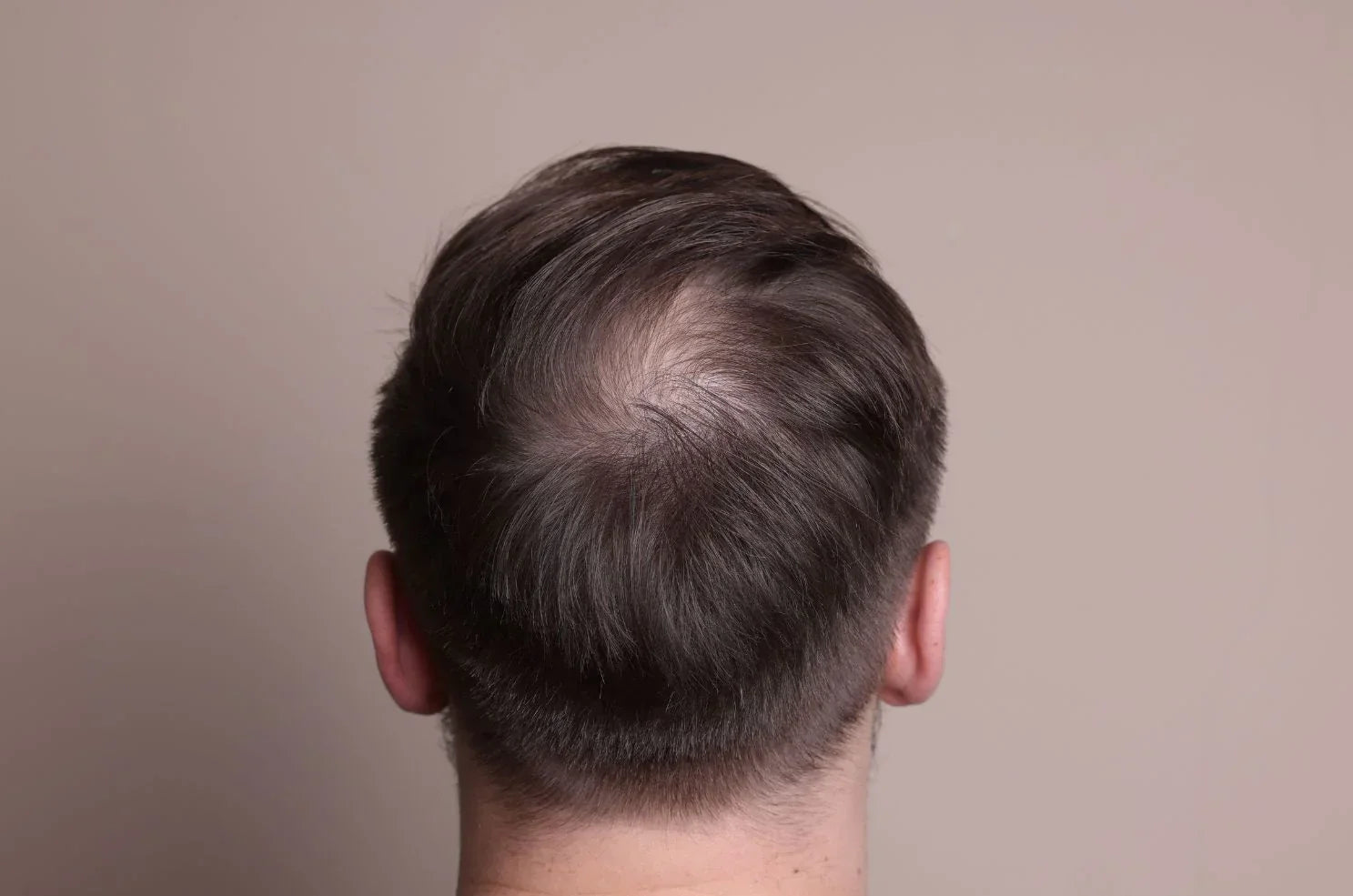
In contrast to the hairline, the crown is often a silent zone. You rarely see the top or back of your head. This "out of sight, out of mind" nature allows thinning at the vertex to progress unchecked for months or even years.
Crown thinning is not usually a recession of a line. It is a diffuse thinning. The hair does not disappear from the edges inward. Instead, the overall density across the entire circular area decreases. By the time you notice a bald spot in a photo or a double mirror check, you have likely already lost 50% of your hair volume in that area.
Differences in Follicle Damage Patterns
The mechanism of loss differs slightly between these two zones due to follicle programming.
Follicles at the hairline often miniaturize until they produce only vellus hair (peach fuzz) or stop growing entirely. This creates a clean, bald recession line. In the crown, the follicles are more likely to stay active but produce finer, weaker shafts. This results in a "see-through" scalp rather than immediate slick baldness. However, the vertex is highly sensitive to DHT. Once the process accelerates in the crown, it can expand radially in all directions. This covers a much larger surface area than the hairline.
Why Progression Speed Is Often Misjudged
Men often believe their hairline is receding rapidly while ignoring their crown. In reality, crown thinning can actually involve a higher volume of hair loss because the surface area is larger.
The progression speed is an optical illusion. You lose density in the crown gradually, often masking the severity until the scalp becomes visible. The hairline recession is linear and obvious. Therefore, while the hairline starts earlier for most men, the crown can deteriorate faster in terms of total strand count once the thinning phase begins.
The Role of Scalp Targeting in Non-Visible Thinning
Because you cannot easily monitor the crown visually, waiting for visible signs is a mistake. Proactive scalp care is essential for this region.
Treating the crown requires covering a broad area of the scalp to reach all affected follicles. Unlike the hairline where you might apply treatment to a specific edge, the crown requires general density support. The goal is to nourish the scalp environment to prevent the existing hairs from becoming finer.
How Anagrow Helps
Anagrow is particularly effective for the diffuse thinning patterns seen in the crown. Its formulation uses plant stem cell technology derived from pea sprouts to reactivate hair growth at the root.
For crown thinning, the challenge is not just keeping hair but thickening the individual strands to reduce scalp visibility. Anagrow targets the dermal papilla to stimulate active growth. This helps restore density to the vertex and strengthens the follicles at the hairline. It provides a dual approach that helps maintain coverage across both critical zones.
.%20A%20common%20debate%20among%20men%20noticing%20early%20signs%20of%20lo...)